• Al. Wojska Polskiego 63a
    21-400 Łuków

  • +48 506 061 433
    biuro@rotomoulding-partner.pl
Rotomoulding - Co to jest Opis i Zastosowanie

Rotomoulding – presenting a practical knowledge capsule

Manufacturing industry professionals are increasingly looking for solutions that clearly optimize core processes. And the answer to their needs appears to be the rotomoulding method. Notably, it has been gaining immense popularity in recent years. That’s why we decided to prepare an article that explains the phenomenon of rotational moulding. We've written a practical guide full of essential knowledge to help you make more informed decisions in the future. Wondering whether rotomoulding is the right choice for your business? Give us a few minutes, and you’ll surely find the answer. Along the way, we’ll introduce you to the key and tangible advantages of using rotational moulding to produce a wide variety of plastic components. Enjoy the read!

What is rotomoulding? Learn the definition

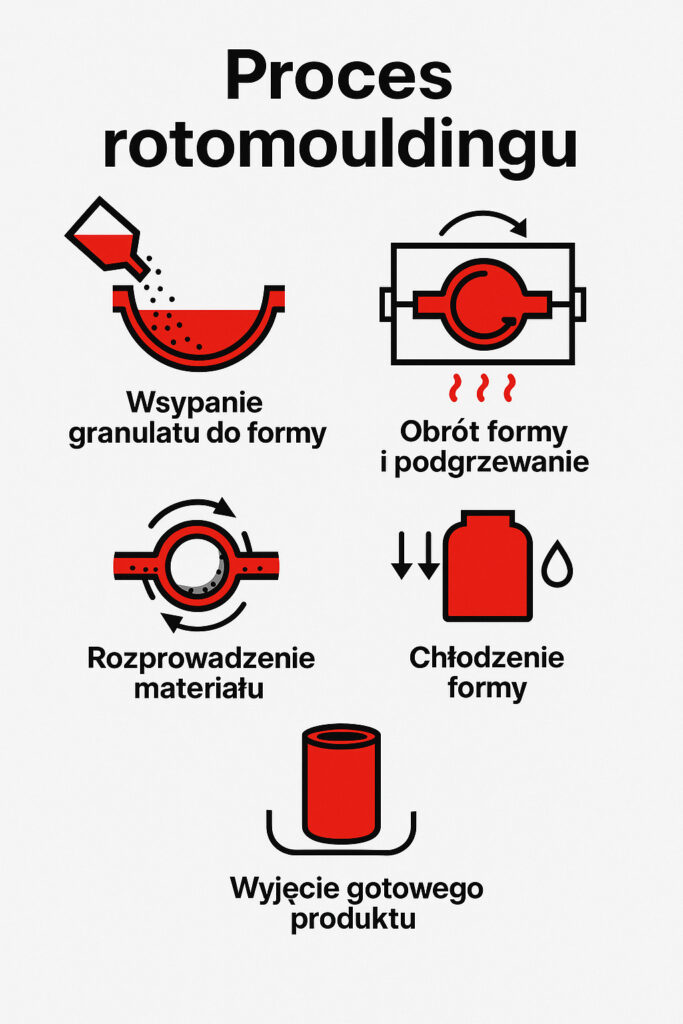
Before we start serving a wealth of practical knowledge, we first want to explain what rotomoulding really is. Rotational moulding, as this process is also called, is currently the most effective and modern method for producing plastic components. Rotomoulding allows for the production of hollow, seamless solutions. with varied shapes and sizes. The entire technology involves introducing the production material into a specialized mold, which is then processed at the appropriate temperature. The granules, thanks to regular rotation around the axis during the process, evenly spreading along the walls of the mold to form a uniform layer. A key step in this technology is the subsequent cooling of the mold using air or water. This is when rotomoulding ensures you obtain components characterized by excellent quality and high durability. And that’s exactly what you expect from your production, right?

The rotomoulding process

The rotomoulding process

Rotomoulding is a solution that works well in many industries

You might not infer this from the definition alone, but rotomoulding is a process distinguished by tremendous versatility in its applications. We’re talking about a wide range of industries where rotational moulding is perfectly suited for producing high-quality components. Especially when compared to alternative production methods. Want to see real examples? We're here to help — rotomoulding is rapidly gaining popularity, for instance, in construction, automotive, agriculture, and transportationSounds impressive? And that’s not even the end of the list. Rotational moulding can also be successfully used to produce kayaks, garden furniture, road architecture elements, and children’s playground equipment. Observing the rapid development of rotomoulding, in fact, we can say that over the years this list will only continue to grow — especially considering the near-complete automation of the process and the relatively low defect rate of the products. The high level of versatility should only attract more and more manufacturers.

Intrigued by rotomoulding?

Dowiedz się, jak technologia formowania rotacyjnego może zrewolucjonizować Twój proces produkcyjny.

Skontaktuj się z nami

Key advantages of rotational moulding

We have smoothly transitioned to the topic of the biggest advantages of using rotomoulding in domestic companies. We discussed the relatively high versatility of the method in the previous part of this article. Now it’s time to expand on this by covering more real conveniences of rotational moulding. Among these are the possibilities to tailor the entire technology and machines to the specific expectations of the producer, the highest quality of the produced componentsan eco-friendly approach to the production of plastic components, significant financial savings, and simplified operation of seemingly very complex machines. We are convinced that this set of advantages makes rotomoulding clearly gains an advantage over alternative methods in manufacturing various plastic components. Especially since they do not have as much such key benefits as financial savings, eco-friendliness, and flexibility in adapting the technology. If you want to produce on your own terms, you simply have to use rotational moulding. You won’t be disappointed!

See how the rotational production process unfolds step by step

Rotomoulding and sustainability — a perfect match!

The topic of ecology in everyday production deserves further elaboration. Why? It’s simple — more and more companies are paying attention to operating in harmony with the surrounding environment. Minimizing pollution caused by machine operation, as well as completely eliminating waste from leftover production material, are definitely the greatest eco-friendly benefits. Besides that, we should also mention:

  • durability of components obtained through rotomoulding,

  • potential recycling of plastic items,

  • various power sources for rotational moulding machines,

  • operation of machines based on renewable energy,

  • energy efficiency of the rotomoulding process.

Comparison: Rotomoulding vs. Injection Moulding – Which is the Better Choice?

This text often included comparisons to alternative methods of producing plastic components. So now it’s time to get specific in this regard as well. For many manufacturers, the biggest competitor to rotomoulding may be injection molding. Indeed, this method will be which enjoyed considerable popularity just a few years agobut it is not comparable to the current widespread adoption of rotomoulding. When comparing one process to the other, it is important to keep in mind the type of final product. Rotational molding works best for somewhat less standard dimensions, while injection molding is an excellent method for producing parts with highly complex geometry. Finances? Rotational molding definitely performs better in this area – rotomolding molds Molds for rotomolding are not nearly as expensive as the patterns used in injection molding.. Users of the final product may also have reservations about the latter method. Working under very high pressure tends to cause micro-damage to the material, which over the course of several months of use can result in actual mechanical or visual damage. This problem has been solved in the case of rotomoulding!

Comparison Table: Rotomoulding vs. Injection Moulding

Criterion Rotomoulding Injection molding
Mold cost Low – aluminum molds, reusable High – precise, steel molds
Detail complexity Simple, symmetrical, hollow elements High – details with complex geometry
Durability of products Very good – no seams or stresses Good – possible microcracks under high pressure
Cost of small-batch production Very cost-effective Not cost-effective (expensive mold setup)
Form preparation time Shorter Longer
Application Tanks, furniture, playgrounds, kayaks Enclosures, small parts, technical components

Case Studies: Examples of Rotomoulding Implementation

🎯 CASE 1: Production of rainwater tanks

Industry: Construction / water and sewage installations
Problem: The client needed large PE tanks with a capacity of 2000 liters, resistant to outdoor conditions, lightweight, and inexpensive to transport.
Solution: The use of rotomoulding made it possible to produce seamless, durable tanks with handles for easy carrying.
Efect:

  • 40% lower mold costs compared to injection molding.

  • 2x faster implementation time

  • The tanks met the standards for drinking water.


🎯 CASE 2: Premium Garden Furniture Manufacturer

Industry: Wyposażenie ogrodu
Problem: Klient szukał unikalnych form donic i siedzisk – trwałych, lekkich, odpornych na UV.
Solution: Produkcja mebli z PE metodą rotomouldingu – formy umożliwiły uzyskanie organicznych kształtów i kolorów.
Efect:

  • Wzrost sprzedaży o 60% w sezonie

  • Redukcja wadliwych sztuk do 0,8%

  • Możliwość szybkiego wprowadzenia nowych modeli

FAQ

#1 Ile kosztuje produkcja elementów z tworzyw sztucznych techniką rotomouldingu?

Całościowy koszt wyprodukowania komponentów z tworzyw sztucznych za pomocą technologii rotomouldingu uzależniony jest od wielu czynników. Najważniejszym będzie aluminiowa forma wielokrotnego użytku. Jest ona stosunkowo tania (w zestawieniu z alternatywami) oraz daje ona możliwość stworzenia nawet kilku tysięcy serii danego produktu. Oprócz tego należy podliczyć koszt związany z zakupem materiału, energią pobieraną podczas pracy maszyny czy też obróbkę końcową. Warto jednak podkreślić, że ekonomiczność produkcji to ważna zaleta rotomouldingu!

#2 Jakie są najpopularniejsze rodzaje maszyn do rotomouldingu?

Najczęściej wykorzystuje się maszynę Carousel (do produkcji dużych zbiorników oraz beczek), maszynę Rock and Roll (do stworzenia chociażby kajaków i innych podłużnych elementów) bądź maszynę Shuttle (do wytwarzania wyrobów ogrodniczych, elementów infrastruktury drogowej).

#3 Czy rotomoulding będzie opłacalny dla mojego przedsiębiorstwa?

Wszystko uzależnione jest od rodzaju działalności oraz od rodzaju tworzonych elementów. Jednak w zdecydowanej większości przypadków – uwzględniając niskie koszty oprzyrządowania i wysoki poziom elastyczności procesu – formowanie rotacyjne można określić korzystnym rozwiązaniem pod względem finansów, inwestycji oraz końcowych zwrotów.

Got questions about rotomoulding?

Skontaktuj się z nami – doradzimy najlepsze rozwiązania dla Twojej branży.

Get in Touch
en_GBEnglish